









Understanding Your Pet’s Needs
Before embarking on any journey, it’s vital to understand your pet’s needs. Each animal has unique preferences and requirements. For example, dogs may need regular bathroom breaks, while cats might feel more comfortable in a quiet space. Spend time observing your pet’s behavior at home to gauge how they handle new situations. Consider their temperament during travel. Some pets are calm, while others may feel anxious with change. Understanding these elements will help you plan better.
Also, consider your pet’s age and health. Older pets or those with medical conditions might require special attention. Consult your vet about any necessary medications or travel advice. This preparation ensures your pet stays happy and comfortable throughout the journey. A well-prepared pet owner is key to a successful trip.
Choosing the Right Travel Method
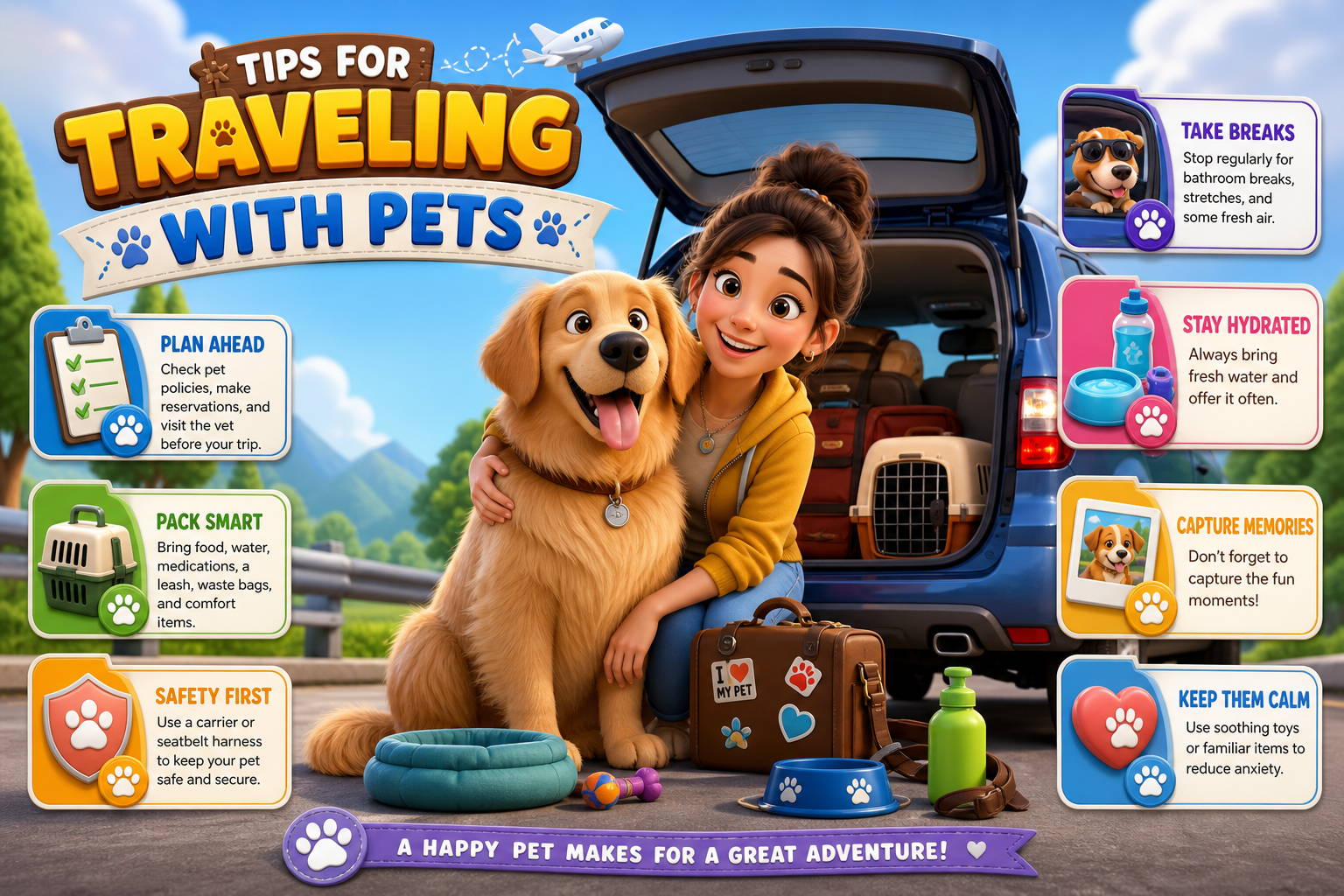
When traveling with pets, selecting the right mode of transportation is important. Different pets respond differently to various travel methods. If you are driving, ensure your pet is securely restrained. Use a pet seatbelt or a travel crate for safety. This helps prevent distractions while driving and keeps your pet safe. For air travel, check the airline’s pet policy. Some airlines allow pets in the cabin, while others only accept them as cargo.
For long journeys, consider breaks. Plan for stops where your pet can stretch, hydrate, and relieve themselves. If taking public transport, familiarize yourself with the rules regarding pets. Always have a plan in place, so your pet feels secure and comfortable.
Preparing Your Pet for Travel
Preparation is key to a successful trip. Start by acclimating your pet to their travel crate or carrier. Leave it open at home, allowing your pet to explore it. Place treats or favorite toys inside to create positive associations. For dogs, practice short car rides before the big trip. This will help them adjust to the motion and sounds of traveling.
Next, gather essential items. Make a checklist that includes food, water, bowls, leash, waste bags, and any medications needed during your trip. Having these items ready ensures you won’t forget anything important. Also, consider a pet first aid kit for emergencies. This simple preparation can make a significant difference in your travel experience.
Choosing Pet-Friendly Accommodations
Finding accommodations that allow pets can be challenging, but many options are available today. Websites like BringFido and Airbnb allow you to filter for pet-friendly places. Check the policies for any size restrictions or additional fees associated with bringing your pet.
When booking, read reviews from other pet owners. Look for comments about the pet-friendliness of the location. Some hotels even offer pet amenities such as dog beds, toys, or treats. Ensure your chosen accommodation has a safe area for your pet to explore. A secure environment will help your pet feel more at home during your stay.
Keeping Your Pet Calm During Travel
Travel can be stressful for pets. To ease their anxiety, maintain a calm demeanor yourself. Pets often pick up on their owner’s emotions. Bring familiar items like a favorite blanket or toy to provide comfort. This can help soothe your pet in unfamiliar surroundings.
Consider using calming products such as pheromone sprays or anxiety wraps. These can help reduce stress during travel. If your pet is particularly anxious, consult your vet about possible medications to help them relax. A well-rested and calm pet is more likely to enjoy the journey.
Feeding Your Pet on the Road
Feeding your pet during travel requires planning. Stick to your pet’s regular feeding schedule as much as possible. Bring their usual food to avoid digestive issues. Pack it in a secure container to prevent spills. For water, always carry a portable bowl and ensure your pet stays hydrated. Offer them water during breaks to keep them refreshed.
Be mindful of your pet’s reactions. Some pets may feel nauseous during travel, especially in cars. If this happens, wait until you reach a destination before feeding them. Monitor their behavior and adjust feeding times as necessary. Keeping your pet’s eating routine consistent helps maintain their comfort during the trip.
Health and Safety Considerations
Your pet’s health and safety should always be a priority when traveling. Before your journey, make sure your pet is up to date on vaccinations. This is especially important if you plan to visit areas with other animals. Carry a copy of their medical records just in case. It’s also wise to have your pet microchipped. This adds an extra layer of security if they get lost.
During travel, keep your pet on a leash when outside. This prevents them from wandering off or getting into dangerous situations. Be cautious regarding local wildlife, as unfamiliar animals can pose risks. Always supervise your pet, especially in new environments. Taking these precautions ensures a safe travel experience for both you and your furry friend.
Handling Emergencies on the Road
No one wants to think about emergencies while traveling, but being prepared can make a difference. Pack essential items in a pet first aid kit, including bandages, antiseptic wipes, and any medications your pet may need. Familiarize yourself with the locations of veterinary clinics along your route. Knowing where to go in case of an emergency can provide peace of mind.
Have a plan in place for various scenarios. For example, if your pet requires immediate medical attention, know how to find the nearest animal hospital. Keep your vet’s contact information handy in case you need advice while on the road. A little preparation can help you handle emergencies smoothly, reducing stress for both you and your pet.
Exploring New Places with Your Pet
Traveling opens up new adventures, and exploring with your pet can be delightful. Research pet-friendly attractions in your destination. Many parks, beaches, and trails welcome pets. Always check the specific rules regarding pets, such as leash requirements or designated areas.
Consider your pet’s comfort while exploring. Take breaks often to avoid overexertion. Bring fresh water and snacks for your pet, especially on long outings. Pay attention to how your pet reacts to new environments. Some pets may feel overwhelmed, while others may thrive. Adapt your plans based on your pet’s needs for a more enjoyable experience.
Returning Home After Your Trip
After a trip, returning home is essential for both you and your pet. Give your pet time to readjust to their familiar surroundings. They may need a few quiet days to relax after the excitement of travel. Keep their routine similar to what it was before the trip to ease this transition.
Monitor your pet’s behavior for any signs of stress or illness following the journey. If they seem unusually anxious or unwell, consult your vet. Returning home is a great time to reflect on the trip and plan future adventures together. Each journey is a learning experience, allowing you to enhance your travel skills for upcoming trips.